Showing posts with label Africa. Show all posts

Sunday, 25 May 2014

Cannes 2014 Predictions...How they came in.

Just after the announcement of the selection of films for the 2014 Cannes Film Festival, I took a quick, rough set of predictions about the outcome of the results and general reaction to a handful of films which can be viewed HERE. This wasn't to suggest insider knowledge, but rather to at the rather self-fulfilling prophecy that Cannes often creates, and its rare willingness to take risks in film selection. This was also to look at the idea that critics, as a group, are often a fairly predictable group, with notions of what will be good, rather than being willing to stand aside from the crowd.

Director Nuri Bilge Ceylan accepts the Palme dWinter Sleep:  My prediction with the Ceylan film was pretty spot on. Winter Sleep received a slightly more lukewarm reception by critics, many complaining it dragged. It did however, as expected, win the Palme D'or, in a gesture that can be seen as more a reward for his whole filmography

Mr Turner and Jimmy's Hall: I was incorrect with a prediction that Jimmy's Hall would win some sort of token award, with an award instead going to Leigh's Mr Turner. However, as predicted both were especially well received in Great Britain, arguable more so than any other place.

Goodbye to Language: Slightly more off with this, apart from (and extremely predictably) that it would split audiences. I didn't expect it to win anything, but did share the Jury Prize.

Maps to the Stars; Two Days, One Night and Foxcatcher: Mixed bag with this prediction, after stating they were unlikely to win anything. Two Days, One Night came away with nothing, despite incredibly strong reviews from critics. As expected, critics were perhaps weary of rewarding the Dardennes too much. Maps to the Stars won best actress, however was not viewed as a contender for anything else. Miller winning best director for Foxcatcher seemed to have been perhaps the biggest surprise. Received near total praise, especially in terms of acting, completely unexpected on my part.

Mommy: Dolan seemed to have surprised everyone with the, again, near total praise received for Mommy. Dolan has seemingly continued to take risks with his development, and a shared Jury Prize with Godard is a massive gesture of support from Cannes. Will surely become a permanent fixture at Cannes, and win the Palme D'or within his next few features to reaffirm Cannes as 'developing' talent.

Timbuktu: Sadly, one I was spot-on with. Won nothing despite incredibly strong reviews in general, with some saying it was their choice to win the main competition. Again, apparently just being in competition is enough for African cinema.

The Search: Was torn apart by the majority of critics in the inevitable post-The Artist backlash. Never stood a chance!

Not a perfect set, but still more hit than miss. Who know's if this says anything about anything, except that I am OK at predicting stuff!

  • Palme d'Or – Winter Sleep by Nuri Bilge Ceylan
  • Grand Prix – The Wonders by Alice Rohrwacher
  • Best Director – Bennett Miller for Foxcatcher
  • Best Screenplay – Andrey Zvyagintsev and Oleg Negin for Leviathan
  • Best Actress – Julianne Moore for Maps to the Stars
  • Best Actor – Timothy Spall for Mr. Turner
  • Jury Prize – Mommy by Xavier Dolan and Goodbye to Language by Jean-Luc Godard


Tuesday, 22 April 2014

Cannes 2014 - What will happen, and what to look for.


Cannes is rarely unpredictable on the surface, certain names regularly crop up in main competition. I will make a few predictions on the likely receptions the films in the main competition will receive, followed by some films that I am excited about, or shake up Cannes to an extent.

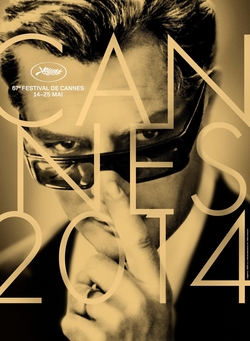
File:2014 Cannes Film Festival poster.jpg

After the announcement of the main competitions at Cannes, the British media focused on the obvious, Leigh and Loach. Sadly, these two represent the past of British cinema, and perhaps we should be looking at why there is a lack of young British talent at Cannes this year. These two will be solidly received at Cannes, but have little impact on any awards. Loach may however receive some token gesture if this is to be his last feature. Goodbye to Language, the latest by Jean-Luc Godard, shot in 3D also inevitably received a lot of attention, however will just as inevitably split audiences and not win much. Other big names, Cronenberg, the Dardenne's and Miller are all likely to be well received, but unlikely to win the main prize (in the Dardenne case, largely because of fear of criticism they can 'do no wrong' in Cannes eyes). Hazanavicius, director of The Artist, is likely to face heavy backlash with The Search that always meets directors after Oscar success. I will revisit these after the awards have been handed out, just to see how predictable these all are...

Now, to the ones that have something exciting about them:

Palme d'Or
Winter Sleep - Nuri Bilge Ceylan
Perhaps the most likely winner of the Palme d'Or, Ceylan has been one of the most exciting directors that Cannes seemed to have plucked from nowhere for a long time. Ceylan has won awards at Cannes regularly, including with his last feature, Once Upon a Time in Anatolia, and as long as it isn't below par (Three Monkeys being the only slightly poor feature out his current six features), Cannes look likely to reward him for his whole filmography. Will receive criticism in some parts who complain it is too slow and long, coming in at 196 minutes.

Mommy - Xavier Dolan
Dolan is easy to hate, but his rate of high-quality features is impossible to ignore. Five features at the age of 25 is incredible, and Mommy has made a leap up into main competition. Tom at the Farm is the only feature of his I am yet to see, however many commentators have stated of the maturity of this work, and the Cannes selection panel seem to agree with this if it has continued into his newest feature. Dolan will face criticism of shallowness, however the talent and consistent quality cannot be ignored. Dolan will be around for a long time, and make genuine works of important cinema. Is unlikely to receive any award, as I am sure Cannes sees the fact that he is even in the main competition as reward enough. Will have to wait a few more features into his career before he has 'earned' the right.

Timbuktu - Abderrahmane Sissako
The token African film that is starting to become a regular feature in main competition, and will receive absolutely nothing in terms of awards, and more than likely receive little attention in the press. However, although even if it is a token gesture, Cannes need to be congratulated for forcing this into the mainstream. Sissako does have a track record in film festivals, as well as links with France, which helps ease him into acceptance with Cannes. Sadly though, this will be the most ignored film in the main competition.

Un Certain Regard
Lost River - Ryan Gosling
Sadly changed its name from How to Catch a Monster. Has an extremely interesting premise. I would normally be weary of big name Hollywood actors being entered into Un Certain Regard, believing it is likely purely for the chance of another star name at Cannes, while also being able to hide the film if it is poor, however Gosling has a good track record with directors he has worked with, and hopefully some of it will rub off.

Snow in Paradise - Andrew Hulme
The one British director to come out of nowhere really into Cannes, it is fair to say there really is no idea of how this will turn out. Hulme has worked as an editor on a fair number of big films in the past, including the well received films of Anton Corbijn. The slow, steady pace of Corbijn is likely to follow through with Hulme's work.

Fantasia - Wang Chao
Has previously won Un Certain Regard, and is likely to be among the favourites again. Sadly Chinese cinema is under-represented this year. Hopefully however, this will make a strong impression on the jury.

Others
The Rover - David Michod
Suprising that The Rover was not up for the Palme d'Or, however still extremely likely that recieve positive reviews. Interesting to see what step Michod makes after the universal acclaim for his debut, Animal Kingdom.

Whiplash - Damien Chazelle
The fact that the winner of Sundance, Whiplash, is so far down the pecking order at Cannes this year, shows just how poor the festival was this year. However, Chazelle making it into the Directors Fortnight is still a great step for perhaps the least likely Mumblecore film-maker to make it big. The fun and playful  Guy and Madeline on a Park Bench seemed like a one off that would sink into obscurity, however Chazelle has seemingly made a niche for himself.

Catch Me Daddy - Daniel Wolfe
Very little is known about this feature, however the work of his previous shorts suggests that Wolfe may become a big name in cinema in the future.

Friday, 3 January 2014

Watching films from other cultures, and can we truly understand? Specifically focusing on the two feature films of Djibril Diop Mambéty.

One of the main reasons I enjoy cinema is that it opens doors to any corner of the world I wish to see. I can be transported into regions that I may never visit, and see people I could never even imagine. Each national cinema is unique to that culture, to its own national/regional stories and symbolism. Because of this however, how can the outsider ever truly understand or appreciates a film that comes from a place they have no knowledge of. How much does the outsider miss? Do they see a completely different film to those of the films native country? Do we even want to see the reality of a country, or rather a blurred view of the exotic?

Edward Saïd, in his book Orientalism[1], wrote in his post-colonialism book how the West imposes certain values and stereotypes on cultures (specifically focusing on the Middle East), both enforcing negative, and romanticised versions. Western Cinema (focusing specifically of that of American and Western European) has inevitably fallen for this short-hand trap, and continually does so. Najat Z. J Dajani’s thesis, Arabs in Hollywood: Orientalism in Film [2] not only presents a fantastic filmography of a number of offending films, but also a fantastic background to a number of case studies and how these views have changed and developed over-time. Sadly however, his work only focuses on the same group as Saïd, and hints at a potential for redemption by Hollywood. However, this was stunted in post-9/11 Hollywood where the Arab would quickly become less exotic, and more demonised. When foreigners are shown in Western films, they are often reduced to these ‘oriental’ ideas.
Foreign made films find it notoriously hard to find audiences in the Western world. However, when one does break through, they often find themselves fulfilling a kind of self-prophecy, as they meet certain stereotypes. We can continue to see such representations of other broad ethnic groups, both negative and romanticised in many foreign made films. The ‘Gesiha’ female East Asian (You Only Live Twice (1967), Memoirs of a Gesiha (2005)) , or ninja male, in a Wuxia film, (The Karate Kid (1984), The Last Samurai (2003))is just one example. If we look at the most successful 50 foreign language films at the Hollywood Box Office[3], 8 are from East Asia, 6 of which are Wuxia. The most successful of not only this group, but of any group is Crouching Tiger, Hidden Dragon (2000) directed by Ang Lee. Crouching Tiger, Hidden Dragon became an incredibly successful film, featuring plenty of fighting scenes, Gesihas and old Chinese buildings. It can be seen as a blend of all of the East Asian stereotypes in one, epic film, a perfect storm of unintentional orientalism that had the West foaming. It perfectly fits into the prism of a Western view of that culture, and therefore the impressive film-making becomes recognised, rather than mistrusted or dismissed. This doesn’t diminish the work of Lee, but rather provides an example of how the West is only willing to accept certain films that fulfil certain viewpoints. As an audience from the West, we automatically impose Western ideas and symbolism onto these films, even when they are not intended for that purpose. When these are missing however, we are likely to quickly dismiss, or become weary of film or film-maker.

Senegalese film-maker, Djibril Diop Mambéty, provides an interesting example of how films can only be successful when they are easier to digest through Western views and symbolism. Mambéty made only two feature length films, Touki Bouki (1973), and Hyénes (1992). Touki Bouki became the far more successful film of the pair, picking up awards at Cannes, as well as entering in at 52 in Empire magazines top 100 non-English language films[4]. But what is interesting is the reasons why it is considered to be so great. The Empire magazine entry alone states that the film is “shot through with French New Wave fizz that flies in the face of conventional African cinema”[5], and that it is a “hybrid of French style and African subject matter”[6]. Apart from the massive generalisation made by Empire, implying that the whole of Africa shares the same influences and problems (a similar statement would never be made in respect to Europe, or Asia), these statements clearly suggest that the film is important because it looks European. Touki Bouki goes hand-in-hand with French New Wave. The reason for this is simple, and understandable, it gives the audience a reference point when watching the film. It provides a place to enter, and understand what they are watching.  When we see quick jump-cuts and frenzied editing, instead of being confused, we can say, “ah, yes, Godard did this as well”. We automatically bring it back into our culture, and elevate it above what we do not attempt to understand.

Hyénes on the other-hand, is a far less successful film in terms of its canonical place in film history. Hyénes is a slower-paced film, and is clearly less reliant on the French New Wave influences. This however removes the entry point that Touki Bouki has, and is therefore rather hidden beneath this monolith of African cinema. Writing on Hyénes is far more limited because of this. Hyénes is a simple story of how money, love and greed can change anyone for the worse. A well-respected future mayor, Dramaan (Mansour Diouf) suddenly finds his life threatened when an extremely wealthy ex-lover returns home and places a bounty on his head. Richard Porton’s review is quick to attempt to position it with a Western entry point, by saying (and again, generalising a whole continental cinema) that “Contemporary African films have been preoccupied with two interlocking themes: the painful legacy of a colonialist past and a concomitant ambivalence towards Western modernity”[7]. Although this is a clearly unavoidable issue the film is attempting to deal with, Porton ignores altogether many more interesting themes and ideas that Mambéty uses.

One of the few interviews with Mambéty, done by N. Frank Ukadike, provides an interesting outlook by Mambéty on how cinema is viewed. Ukadike asks why one of the bodyguards is Asian; Mambéty says that “The point is not that she is Asian. The point is that everyone in Colobane--everyone everywhere--lives within a system of power that embraces the West”[8]Mambéty also continues throughout to try press the point that Hyénes is a human film, rather than a specific type of film representing a specific group.

To make Hyènes even more continental, we borrowed elephants from the Masai of Kenya, hyenas from Uganda, and people from Senegal. And to make it global, we borrowed somebody from Japan, and carnival scenes from the annual Carnival of Humanity of the French Communist Party in Paris. All of these are intended to open the horizons, to make the film universal. The film depicts a human drama. My task was to identify the enemy of humankind: money, the International Monetary Fund, and the World Bank. I think my target is clear.
While Hyènes tells a human story to the whole world, I also wanted to pay homage to the beauty of Africa when I made the film.”[9]

This flies in the face of the Western view that a film of this nature could only be a response to internal problems faced by those in Senegal or Africa. Mambéty has instead intended to make a global film, rather than one that pleases Western critics through images of the ‘Oriental’.  When Mambéty is later on asked about the potential of co-financial productions with European and African film companies, Mambéty reply is clear “I don't want to talk about Europe. Let's talk about making films in Africa. Europe is not important for me.”[10] With Hyénes, Mambéty shuns the views of the ‘Oriental’, and embraces the human. This perhaps could be seen as a threatening stand-point, as it shows Africans not needing help of the superior West, but rather attempting to mutually help each other. We cannot look down anymore, but rather look eye-to-eye.

Whether this patronising view, the view of the ‘Oriental’ will change in the near future is extremely doubtful. While Western film critics continue to dismiss films that they do not understand, rather than attempting to learn what certain types of symbolism may mean, or embracing new regional styles of film-making, it is extremely unlikely that a highly successful film will emerge from a smaller country and enter mainstream Western consciousness. However, living in an age where it is incredibly easy to discover at access films from anywhere, there is room for the tide to slowly change, and for undiscovered films, both from the past and present, to be found, and appreciated on the level it deserves. Maybe we can never understand completely a film made on the other side of the Earth, but that doesn’t mean we cannot appreciate it and enjoy.

DANNY MOLTRASI


[1] Orientalism by Edward Saïd (Published 1978)
[2] Arabs in Hollywood: Orientalism in Film by Najat Z.J Dajani (Published 2000) https://circle.ubc.ca/bitstream/handle/2429/10580/ubc_2000-0378.pdf?sequence=1
[5] Ibid
[6] Ibid
[9] Ibid
[10] Ibid