Showing posts with label Indie. Show all posts

Wednesday, 11 February 2015

Frank V. Ross - What's the Point of Cinema?


FRANK V. ROSS - 


"I was watching a film called Blue is the Warmest Color and had to know what it was shot on, so during this movie in a language I did not speak in admiration of the photography I looked away from the image and the subtitles to my little phone and went to the IMDB app, typed in the name of the movie and scrolled down to ‘tech specs’, found ‘Canon EOS C300, with Angenieux Optimo Lenses, copy and pasted that, put it in my ‘notes’ app… You get it. 

I looked up having missed the last whatever of the movie, took the remote, backed it up to where I think I was, since the movie was paused got up and make some tea, cut some cheddar cheese, a few pepperoncinis… If I saw someone watching my movie like that I’d have a conniption fit (cause I know they do and every programmer or critic with a screener that doesn’t like my film, or can go either way on it, I wonder if they properly watched the movie. And, they didn’t) cause a motion picture is an involved experience. Think if you’re watching Harold and Maude and you’re looking at the phone and miss the two second cutaway to Maude’s tattoo. Or Dutch and miss the ‘Dutch Dooley Construction sign’. What about the shot of the cook in Hunt for Red October. Adrain’s hat. The glare of the rich boy to Bruno. 
The Cinema is the room that saves us from ourselves. Not to be my final point but a Cinema is why Cinema will always be better than TV, we’re too distracted at home and nobody is asked to live tweet during the new Woody Allen movie, he’s doing TV for that.
With so many ways to distribute a movie nowadays, we need to keep the big screen and lock the door to our distractions and shut the fuck up for a minute and watch a movie. A funny movie, a plot driven heist or murder mystery always functions better if you’re, you know, watching. You can’t fall into a rhythm using a pause button. How are we to let an existential crisis wash over us if we keep looking out the window and at our phone? We can’t. The point of a Cinema is the building. Like a Church, which is a building, the people are the Church, they go to a Church Building and do all their bullshit. I’ve learned as much about life from Tarkovsky as I have from Priests. More about morality from DeSica than the King James Bible…
Whoa!
Let’s dial it back. The Cineplex near my house puts it best “our world seems over run with technology. A movie theatre is not the place for it. LOL and BFF on a bright screen is distracting, so be courteous to those around you and silence or turn off your phones. If you have an emergency step out into the hallway, otherwise it can wait.”  It’s just a nice place to be."
Filmography  (as director) -
Oh! My Dear Desire - 2003
Quietly On By - 2005
Hohokam - 2007
Present Company - 2008
Audrey the Trainwreck - 2010
Tiger Tail in Blue - 2012
Bloomin Mud Shuffle - 2015

Frank V. Ross is among the most exciting American independent director's post-2000s. Tiger Tail in Blue was recently nominated at the Gotham Awards for 'Best Film Not Playing in a Cinema Near You'. His films are available to watch on Fandor, here. Bloomin Mud Shuffle is due to show later this year.

Tuesday, 22 April 2014

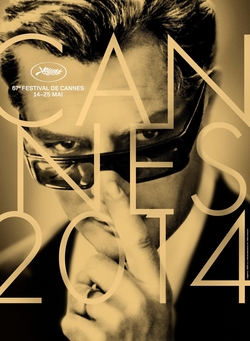
Cannes 2014 - What will happen, and what to look for.


Cannes is rarely unpredictable on the surface, certain names regularly crop up in main competition. I will make a few predictions on the likely receptions the films in the main competition will receive, followed by some films that I am excited about, or shake up Cannes to an extent.

File:2014 Cannes Film Festival poster.jpg

After the announcement of the main competitions at Cannes, the British media focused on the obvious, Leigh and Loach. Sadly, these two represent the past of British cinema, and perhaps we should be looking at why there is a lack of young British talent at Cannes this year. These two will be solidly received at Cannes, but have little impact on any awards. Loach may however receive some token gesture if this is to be his last feature. Goodbye to Language, the latest by Jean-Luc Godard, shot in 3D also inevitably received a lot of attention, however will just as inevitably split audiences and not win much. Other big names, Cronenberg, the Dardenne's and Miller are all likely to be well received, but unlikely to win the main prize (in the Dardenne case, largely because of fear of criticism they can 'do no wrong' in Cannes eyes). Hazanavicius, director of The Artist, is likely to face heavy backlash with The Search that always meets directors after Oscar success. I will revisit these after the awards have been handed out, just to see how predictable these all are...

Now, to the ones that have something exciting about them:

Palme d'Or
Winter Sleep - Nuri Bilge Ceylan
Perhaps the most likely winner of the Palme d'Or, Ceylan has been one of the most exciting directors that Cannes seemed to have plucked from nowhere for a long time. Ceylan has won awards at Cannes regularly, including with his last feature, Once Upon a Time in Anatolia, and as long as it isn't below par (Three Monkeys being the only slightly poor feature out his current six features), Cannes look likely to reward him for his whole filmography. Will receive criticism in some parts who complain it is too slow and long, coming in at 196 minutes.

Mommy - Xavier Dolan
Dolan is easy to hate, but his rate of high-quality features is impossible to ignore. Five features at the age of 25 is incredible, and Mommy has made a leap up into main competition. Tom at the Farm is the only feature of his I am yet to see, however many commentators have stated of the maturity of this work, and the Cannes selection panel seem to agree with this if it has continued into his newest feature. Dolan will face criticism of shallowness, however the talent and consistent quality cannot be ignored. Dolan will be around for a long time, and make genuine works of important cinema. Is unlikely to receive any award, as I am sure Cannes sees the fact that he is even in the main competition as reward enough. Will have to wait a few more features into his career before he has 'earned' the right.

Timbuktu - Abderrahmane Sissako
The token African film that is starting to become a regular feature in main competition, and will receive absolutely nothing in terms of awards, and more than likely receive little attention in the press. However, although even if it is a token gesture, Cannes need to be congratulated for forcing this into the mainstream. Sissako does have a track record in film festivals, as well as links with France, which helps ease him into acceptance with Cannes. Sadly though, this will be the most ignored film in the main competition.

Un Certain Regard
Lost River - Ryan Gosling
Sadly changed its name from How to Catch a Monster. Has an extremely interesting premise. I would normally be weary of big name Hollywood actors being entered into Un Certain Regard, believing it is likely purely for the chance of another star name at Cannes, while also being able to hide the film if it is poor, however Gosling has a good track record with directors he has worked with, and hopefully some of it will rub off.

Snow in Paradise - Andrew Hulme
The one British director to come out of nowhere really into Cannes, it is fair to say there really is no idea of how this will turn out. Hulme has worked as an editor on a fair number of big films in the past, including the well received films of Anton Corbijn. The slow, steady pace of Corbijn is likely to follow through with Hulme's work.

Fantasia - Wang Chao
Has previously won Un Certain Regard, and is likely to be among the favourites again. Sadly Chinese cinema is under-represented this year. Hopefully however, this will make a strong impression on the jury.

Others
The Rover - David Michod
Suprising that The Rover was not up for the Palme d'Or, however still extremely likely that recieve positive reviews. Interesting to see what step Michod makes after the universal acclaim for his debut, Animal Kingdom.

Whiplash - Damien Chazelle
The fact that the winner of Sundance, Whiplash, is so far down the pecking order at Cannes this year, shows just how poor the festival was this year. However, Chazelle making it into the Directors Fortnight is still a great step for perhaps the least likely Mumblecore film-maker to make it big. The fun and playful  Guy and Madeline on a Park Bench seemed like a one off that would sink into obscurity, however Chazelle has seemingly made a niche for himself.

Catch Me Daddy - Daniel Wolfe
Very little is known about this feature, however the work of his previous shorts suggests that Wolfe may become a big name in cinema in the future.

Monday, 24 February 2014

British Indie Film Renaissance? Maybe not…

MaryAnn Johanson recently wrote an interesting piece for indiewire, entitled ‘Why British Film is in the Middle of an Indie Renaissance’[1]. It was widely shared, receiving attention all the way up to the BFI who were quick to jump on an unbiased appraisal of British Cinema. I have also written about the strong state of British cinema[2], which has also incidentally been my most viewed written piece on this blog. There is obviously a strong interest in current British cinema. However, I do have a major problem with the writing of Johanson with this piece, and that is the term, ‘indie’.

The term Independent Cinema since the 1990s has entered, in an almost paradoxical way, the mainstream. Quickly big budget studios were attempting to push films with an indie tag, selling it as unique, fresh, and interesting. It has become almost a genre within itself. People would not flinch at someone saying “I saw this fantastic indie movie the other day!”, just as that wouldn’t flinch at someone saying they saw a fantastic horror film. But people are easily duped into believing it is an Independent production, when it rarely is.

A discussion of what is truly independent is an impossible task, as it is an almost impossible criteria to attain. If we are to take it at its most literal sense, this would mean a film made with no restrictions whatsoever, and therefore we would be limiting ourselves to a small handful of films. I, therefore, do not wish to attempt to state a firm definition of what ‘indie’ cinema is, but a few broad statements that can help place films within this context. I do think it is fair to say that if a film receives financial support from an major outside source, one that often runs into the millions, the film is more than likely not a true independent movie. This obviously rules out American studio-productions, but becomes slightly more tricky in non-American movies, where the studio system is not the same. I would therefore like to suggest that if a film is made for more than ten times the average yearly wage of an average citizen in that country, the chances are again that it has received a fair amount of outside support. If we are to take the UK as an example of this, where the average yearly wage is £26,500[3], this gives a fairly large budget of £265,000. This is obviously open for criticism, as it is a very cheap and quick barometer to measure by, but does give some sort of range to consider.

We could delve deeper into this, to investigate with whom final cut was with, if outside support was provided unconditionally, and so on, but this would then require a film by film investigation. I rather, for now, provide the shorthand approach mentioned before to the films MaryAnn Johanson has discussed.
My two main problems with the films mentioned by her are, firstly, the broad usage of ‘British film’, and broad usage of ‘indie’. Here, we can look at each film mentioned by Johanson, and use the term broad ideas I have also used. In her opening paragraph we are presented with a strange selection of films to use as an introduction for British indies:

Gravity (2013) As Johanson acknowledges, is studio backed, and is therefore a strange example by Johanson in an article about independent cinema.

Les Misérables(2012)Budget of $61mil, and heavy studio support.

World War Z (2013) A mind-boggling budget of $190mil, not exactly indie cinema range…

Fast and Furious 6 (2013)Another massive budget of $160mil, and with very little British involvement.

Rush(2013)Johanson stats that its budget of $38mil is ‘paltry’ (for who exactly?!), as well as acknowledging its Hollywood money, instead claiming that its British cinematography and location of sets makes it a perfect example.

We are then taken onto how the Harry Potter series has drawn big productions to British shores (again, this is clearly true, but I struggle to see its relevance to an article about independent cinema?). We are also teased with the future big budget American films that are shot in the UK, Fury (2014) and the new Star Wars (2015) films.
Johanson then presents us with some core films of her argument.
Locke (2013) – Made on a budget of under $2million[4] is a more realistic example of British Independent cinema. However this is another cross-country production, joint with American support through American production company IM Global.

Dom Hemingway (2013) – Although I failed to find the budget for this film, it did receive a large amount of studio support from the likes of BBC Films,  as well receiving distribution from major faux-indie companies, Lionsgate and Fox Searchlight Pictures.

Filth (2013) – Another slightly too high budget at £3million, but can fairly be classed as a purely British (Scottish?) film with about as little interference a film of that budget that could expect.

A Fantastic Fear of Everything (2013) – Again, I struggled to find the exact budget, but it was financed by a Pinewood Films initiative to help low-budget British films[5]. Although a positive thing, it would be silly to claim that no interference or ideology would have been placed on this film.

The Selfish Giant (2013) – Clio Bernard is one of the key British film-makers today, but The Selfish Giant received huge support (and rightly so) from both the BFI and Film4.

Sightseers (2012) and A Field in England (2013) – This pair of films are both fantastic, and provide examples of fresh British cinema. A Field in England is perhaps the closest example of independent cinema. However, it became a flagship film for Film4, as it was released simultaneously by them in Cinema, Television, VOD and DVD. A lot of money was pumped into the release of it in this experiment. The film however is unarguably unique.

Metro Manila (2013) – Is just as Filipino as it is English, and can be claimed as either. I do however feel this is perhaps the truest out of all the films mentioned as being British indie cinema.
Philomena (2013) - $12mil budget staring Judi Dench and Steve Coogan?

The Invisible Woman (2013) – Another big name project, all the way from director, writer and cast.

Under the Skin (2013) – Another joint production with America, staring Scarlett Johansson, and despite its strange story is unlikely to have received little interference.

The Double (2013) – Big names in cast, big financial support, and big distribution.
What MaryAnn Johanson has attempted to write about is fantastic, and a lot of the films mentioned by her deserve more recognition. However these are nearly all not really independent films by any stretch. British mainstream cinema is currently in a fantastic place, and great films are often being made by British people, and big productions are being drawn to Britain. However, independent, low to no-budget cinema is almost non-existent.

Collective film-movements, or film websites, discussion, or festivals are few, and far between in the UK. The Raindance Film Festival is perhaps the only festival that gets any sort of recognition that takes any risks with the types of no-budget films it shows. However, very few of these films or those involved take a step-up into the mainstream. The bridge between these two worlds is not there sadly, despite the talent obviously being there. Despite it never being easier to watch films for cheap, no truly low-budget film has exploded onto the British scene in the way it has often done in American cinema. There is no, and will be no British Indie Renaissance until that bridge can be made stable, and sustainable.


[1] http://www.indiewire.com/article/why-british-film-is-in-the-middle-of-an-indie-renaissance
[2] http://whatsthepointofcinema.blogspot.com/2013/11/new-british-cinema-post-2000-cinema-in.html
[3] http://www.bbc.co.uk/news/business-20442666
[4] http://www.screendaily.com/reviews/the-latest/locke/5059867.article
[5] http://collider.com/fantastic-fear-of-everything-image-simon-pegg/

Thursday, 13 February 2014

Frownland and Disability


So far the only feature directed by Ronald Bronstein, Frownland (2007) is one of the most powerful films from the 2000s, and from the independent scene in America. Bronstein spends over an hour and half tearing its audience apart with its lead character, played to painful affect by Dore Mann. Frownland won the Special Jury Prize at SXSW Film Festival.

Bronstein, in his feature, creates a film that not only makes you hate the characters, but hate yourself for hating him. Dore Mann plays Keith, who although never stated, seems to have some sort of disability that prevents him from dealing with apparently simple and easy day-to-day social encounters. Although you are aware that you should feel sorry for him as he struggles, it is almost impossible not to wish to lash out like the characters around him. This conflict has stuck with me since first seeing Frownland. Should I feel sorry for him? Am I bad for feeling sorry for him? Does he even deserve any sympathy?

Keith is treated badly, lives in mess and poverty, and yet it seems impossible to have any sympathy for him. Bronstein however seems to be attempting to empower Keith by removing his disability from the equation. It becomes a background factor, and rather we judge Keith on his day-to-day actions. Disability, when featured in a film, is often the key feature to that film, the driving force behind the narrative, something we, the ‘normal’ can belittle and sympathises with. We attempt to fit them into a spectrum we understand, making ‘them’ more like ‘us’. We watch a film like Rain Man (1988) in order to see him ‘overcome’ his terrible life, attempting to ‘normalise’ him instead of embracing what he is. The Intouchables (2011) is a more recent high-profile example. Very few films embrace its main character’s disability or refuse to sympathise with it. Whereas Frownland normalises by making us not feel sympathy for Keith, Beeswax (2009) does this by almost ignoring the fact our main character is in a wheel-chair, or Punch-Drunk Love (2002) placing its character in a traditional rom-com situation, while embracing its slightly off-kilter lead.


The ugliness of the characters, Keith’s struggle to understand what is happening around him, is matched by the direction of Bronstein, who never allows the viewer to settle. We are constantly presented with blurry, hard to understand images on scratchy film. This is done more than for aesthetic reasons, but rather to give an idea on how hard it is for Keith to understand daily social situations. When we can’t focus, Keith can’t focus, we panic, are frustrated, confused. We can understand Keith, yet not can’t as well. It’s beautiful, painful, tormenting and destroying. For a short amount of time, you are placed in the mind of someone who cannot deal with simple situations, and we quickly begin to hate ourselves for becoming part of it. Just as Keith clearly hates himself for living. The only difference is after 110 minutes.

All done on a tiny-budget.

Monday, 27 January 2014

Kentucker Audley - What's The Point of Cinema?


KENTUCKER AUDLEY -


"I make movies to document the personalities and relationships of those around me. 

What I get out of watching movies is a pure mystery, which I like to preserve."

Filmography

Director - 
Team Picture (2007)
Holy Land (2010)
Open Five (2010)
Open Five 2 (2012)

Actor (Selected) -
Marriage Material (2012)
V/H/S (2012)
Sun Don't Shine (2012)
Ain't Them Bodies Saints (2013)

NOBUDGE - NoBudge is an online screening venue & hub for true indie films. It was started in February 2011 by filmmaker Kentucker Audley to premiere & compile true indie films.